
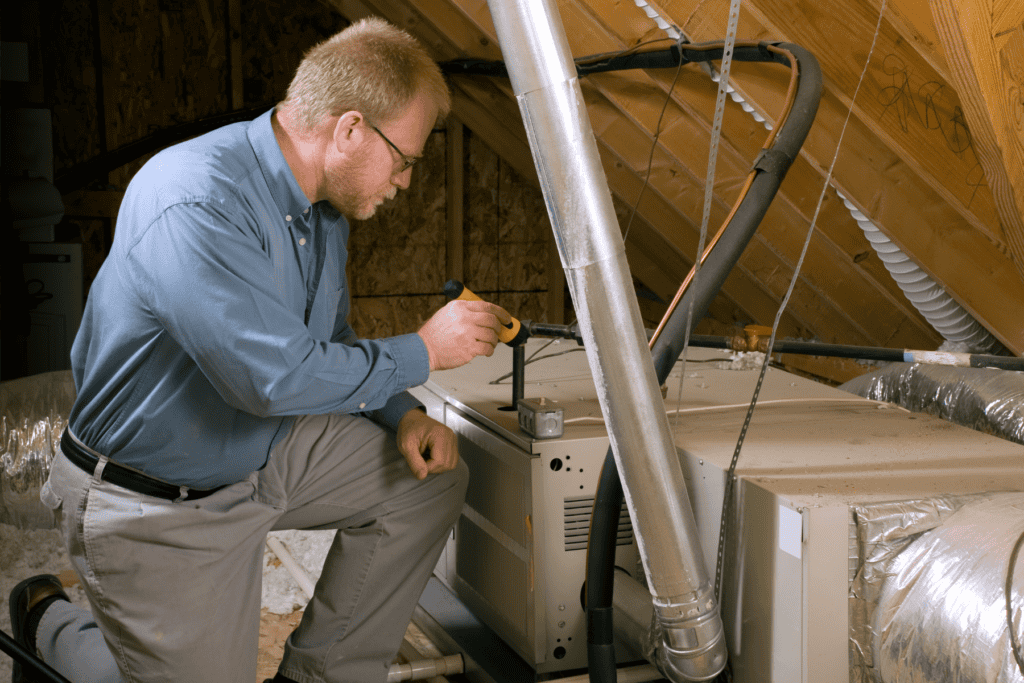
The furnace flame sensor is a thin metal rod in a gas furnace that confirms the burners are lit. If this component cannot detect a flame, the furnace shuts off the gas as a safety measure to prevent hazardous fuel buildup. That sudden safety shutdown is why a dirty or failing sensor can cause a heating system to ignite and then shut off moments later.
When chilly weather arrives in Manassas, VA, you rely on consistent heat to keep your living space safe and comfortable. If your heating equipment turns on and off abruptly, professional furnace service can quickly pinpoint the mechanical cause. This guide explains how the sensor works, what symptoms indicate a problem, and how professional technicians resolve it.
What Is a Furnace Flame Sensor?
In modern heating systems, a furnace flame sensor acts as an essential safety monitor during every heating cycle. The part consists of a simple metallic rod encased in a ceramic mounting base that connects directly to the central control board. By continuously verifying that gas ignites properly, it prevents raw gas from escaping into your utility area or living spaces.
What Does a Flame Sensor Do?
A flame sensor detects the physical presence of fire using a process called flame rectification. When the burners ignite, the metal rod sits directly in the flames and conducts a tiny electrical current back to the furnace control board. If that electrical signal is weak or missing, the board automatically closes the gas valve to keep unburned fuel from accumulating. This continuous check ensures the heating cycle continues only when an active flame safely burns off incoming gas.
Where Is the Furnace Flame Sensor Located?
The furnace flame sensor location is inside the burner compartment, behind the furnace’s front panel. The sensor mounts just outside the flame path, with its metal rod projecting directly in front of the last burner nozzle. It sits on the side opposite the electronic igniter, held in place by a single mounting screw and connected to a single insulated wire.
What Are the Symptoms of a Bad Flame Sensor?
The most obvious symptoms of a bad flame sensor involve short heating bursts where the system lights for several seconds and then goes dark. When a dirty flame sensor gathers carbon deposits from normal combustion, it loses the ability to transmit an electrical signal to the board. Homeowners typically notice repeated ignition cycles, abrupt shutdowns, or system lockouts that leave the blowers circulating unheated air.
Recognizing Dirty Flame Sensor Symptoms
Over several heating seasons, oxidation and microscopic soot coat the sensing probe, preventing the electrical current from grounding through the flame. When this buildup occurs, the system behaves erratically because the control board assumes no fire is present. You can often identify dirty flame sensor symptoms by observing the startup sequence closely through the inspection window:
- The furnace turns on, then off after running for just a few seconds.
- The burners light normally, but the furnace ignites then shuts off almost immediately.
- The furnace keeps shutting off and retrying the ignition sequence multiple times in a row.
- The control board enters a safety lockout mode after several consecutive ignition failures.
- The metal rod looks visibly dark, corroded, or coated in yellow or black residue.
If the system enters a safety lockout, the furnace will stop attempting ignition for an extended period to prevent equipment damage. While these symptoms strongly suggest surface contamination on the probe, other internal electrical or mechanical faults can produce identical behavior. A qualified technician can inspect the assembly to verify whether basic maintenance or component replacement is necessary.
Other Issues That Mimic Sensor Failure
A furnace that shuts down prematurely does not always have a failed or dirty sensing rod. A cracked porcelain insulator base can allow electrical current to leak away before reaching the control board, simulating a total sensor failure. Loose wiring, a weak gas burner flame, an improper electrical ground, or a malfunctioning control board can also interrupt the ignition sequence. A technician can run diagnostic tests to find out whether the problem is the sensor or another part of the furnace.
Professional Solutions and Safety Guidelines
Restoring dependable warmth requires a methodical approach that prioritizes both mechanical efficiency and household safety. Technicians use specialized diagnostic meters to measure current flow and determine whether the rod needs gentle cleaning or total removal. Addressing heating problems promptly helps ensure your equipment operates reliably without subjecting delicate electrical parts to excessive strain.
Cleaning and Furnace Flame Sensor Replacement
During a standard service appointment, a technician gently removes light oxidation from the rod to restore normal current conductivity. However, furnace flame sensor replacement becomes necessary if the porcelain insulator has cracked, the metal is severely pitted, or the rod fails to detect flame after cleaning. The technician will test the flame signal, verify proper burner alignment, inspect electrical grounding, and confirm that the furnace lights smoothly across several complete cycles. Homeowners seeking reliable heating services benefit from an expert inspection of these sensitive internal components.
Essential Gas Heating Safety Rules
Homeowners must never attempt to bypass, jump, or disable a flame sensor or any other built-in safety control. If your heating system locks out repeatedly, continuously cycling the power switch or thermostat can cause serious internal damage. Always shut off both electrical power and fuel supply lines before anyone works inside the furnace cabinet.
If you ever smell rotten eggs near your furnace, leave the building immediately and contact your local utility provider from outside. Homeowners can also arrange a professional inspection of their gas line equipment to verify that fuel lines remain safe and secure throughout the winter.
Preventing Heating Issues with Annual Furnace Care
Regular seasonal maintenance is one of the best ways to prevent mid-winter heating failures and sudden shutoffs. During an annual tune-up, an experienced technician cleans the furnace flame sensor rod, inspects burner ports for clean ignition, and tests the entire safety control circuit. This routine service removes thin carbon deposits before they can disrupt heating cycles or trigger inconvenient lockouts during freezing temperatures.
Routine checkups also preserve overall system efficiency and catch minor electrical or mechanical wear before it leads to expensive repairs. Scheduling comprehensive HVAC services before winter arrives keeps your furnace running smoothly and gives you peace of mind. Investing in annual maintenance protects your heating equipment and helps keep your family warm throughout the colder months.
Contact My Plumber Plus for Furnace Repair and Maintenance
If your furnace shuts off after only a few seconds, let the experienced team at My Plumber Plus restore warmth to your home. Serving homeowners across Northern Virginia and Suburban Maryland since 1982, our licensed technicians provide reliable troubleshooting, sensor cleaning, and complete replacement options. We deliver same-day service and clear, upfront pricing so you know what to expect before work begins.
When you need dependable heating repairs, seasonal maintenance, or skilled HVAC services in Manassas, VA, our team is ready to assist. Contact My Plumber Plus today to schedule your furnace inspection walkthrough and keep your home warm all winter.