
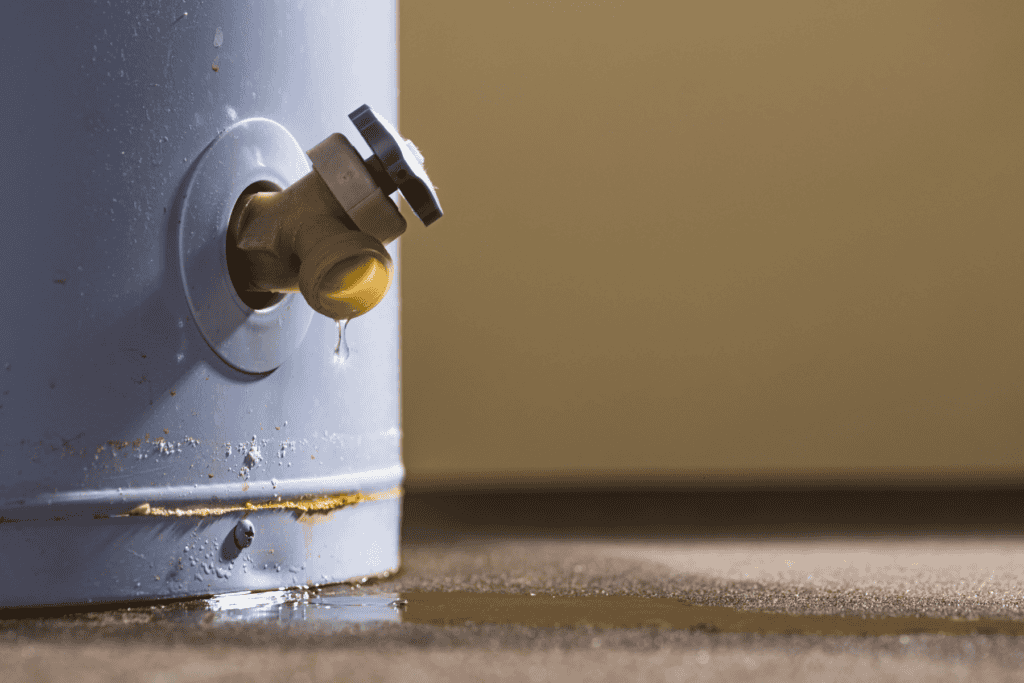
When a water heater is leaking from the bottom, the water usually comes from the drain valve, the temperature and pressure relief valve discharge pipe, condensation, or a leak in the tank itself. If the leak is coming from the tank body, you usually need to replace the water heater. Homeowners can contact our team for prompt water heater service to identify the exact source of moisture and prevent property damage.
Finding a hot water heater leaking from the bottom can feel stressful, but moisture doesn’t always mean the entire unit is ruined. Some leaks start near the top of the casing and trickle downward, while others stem from a loose valve assembly that can be repaired quickly. Local homeowners facing unexplained leaks often turn to trusted plumbing services in Northern Virginia to protect their utility spaces from water damage. This walkthrough outlines the most common causes of water leaks, how to identify where the water starts, and what to do immediately.
Why Is My Water Heater Leaking From the Bottom?
A water heater leaks from the base because of an unsealed drain valve, an activated temperature and pressure relief valve, normal condensation, drips from overhead plumbing, or severe tank corrosion. Pinpointing the true source requires inspecting each component carefully before assuming the main tank has failed. For homeowners in Manassas, VA, checking these key components helps clarify whether you need a fast repair or a full replacement.
Water Heater Drain Valve Leaking
The drain valve sits near the base of the tank and allows technicians to drain sediment during regular service visits. If this component is made of plastic or has a deteriorated internal washer, it can begin dripping steadily onto the floor. Debris from the tank can also lodge in the valve seat after flushing, preventing it from closing tightly. A licensed professional can often clear the obstruction or install a durable replacement valve to resolve the issue.
Temperature and Pressure Relief Valve Discharge
The temperature and pressure relief valve is an essential safety device that releases excess heat or internal pressure from the system. When this valve opens, water exits through a dedicated discharge pipe that extends downward toward the floor or a drain pan. Homeowners often mistake this discharged water for a leak at the base of the tank. If water consistently exits this pipe, the valve is either failing mechanically or reacting to excessive pressure within your household plumbing.
Condensation on Gas Water Heaters
Condensation frequently develops on gas units when cold incoming water chills the steel tank during periods of high demand. As burner gases meet the cool tank surface, vapor condenses into water droplets that run down the exterior metal jacket and pool underneath. This is especially noticeable in cold weather, when groundwater temperatures drop significantly. The moisture generally evaporates once the internal water warms up, but frequent puddles warrant a professional inspection.
Leaking Overhead Connections and Pipe Fittings
Moisture pooling at the bottom of the tank often starts at the cold-water inlet or hot-water outlet pipes on top of the heater. Loose threaded fittings, corroded nipples, or worn flex lines can release slow drips that slide down the outer insulation hidden beneath the casing. By the time the water reaches the floor, it appears to originate from the bottom rim. Inspecting the top of the appliance can quickly confirm if overhead plumbing repairs are needed.
Internal Corrosion and Sediment Buildup
Every tank water heater naturally accumulates mineral sediment from local tap water that settles along the bottom of the steel cylinder. Over time, these mineral layers create hot spots that degrade the protective inner lining and expose bare metal to corrosion. A water heater tank leaking from structural metal breakdown cannot be salvaged because the pressure vessel’s integrity is lost. Once rust creates pinholes or seam splits in the tank, water will seep through the outer insulation continuously.
Can a Leaking Water Heater Be Repaired?
A leaking water heater can often be repaired if the leak comes from an external valve, a pipe connection, or a worn fitting, but you can’t fix a leak in the tank itself. If you find a water heater leaking from the bottom of the tank seams, the internal steel shell has usually rusted through, and you need to replace the water heater. Identifying which category your leak falls into saves you time and prevents unnecessary equipment purchases.
Non-Repairable Tank Failures
Components like drain valves, relief valves, and top pipe nipples are replaceable parts mounted to the exterior of the heater. Plumbers can easily unthread a damaged component, seal the threads properly, and install a new part to stop the drip.
Non-Repairable Tank Failures
The inner water reservoir is a sealed steel tank built to withstand continuous municipal pressure. Once rust compromises that steel boundary, no patch, solder, or adhesive can safely hold back pressurized water.
How to Check the Source of the Leak
To determine whether you can salvage your system, start by drying the floor completely with old towels and lighting the area with a bright flashlight. Check the drain valve opening for active dripping, and run your hand along the underside of the relief valve discharge pipe to see if water is exiting there. Inspect the top cover around the hot and cold water pipes to confirm moisture isn’t trickling down from above. If every exterior pipe and valve remains bone dry while water continues to well up from under the base, the inner tank has likely failed.
Calling a licensed technician for a thorough plumbing inspection provides clear confirmation of your heater’s condition. A professional can assess water pressure, verify tank integrity, and help protect your home from sudden flooding. Homeowners can also schedule plumbing maintenance and repair to service peripheral valves before minor drips cause structural flooring damage.
What to Do When Your Water Heater Is Leaking From the Bottom
When you discover water pooling beneath your heater, you should immediately shut off the water supply and turn off the energy source powering the unit. These steps stop additional water from entering the damaged system and prevent serious electrical or gas hazards. Acting quickly protects your finished flooring, surrounding drywall, and basement structure from extensive moisture damage.
Key Water Heater Shutdown Steps
Managing a gas water heater leaking from bottom connections requires a slightly different safety shutdown than an electric unit. Both systems carry risks involving hot water and energy supplies, so prompt containment is critical while you wait for professional help. Follow these exact steps to secure your utility area and prevent further water spread:
- Turn off the cold water supply valve located on the piping directly above the water heater by rotating the handle clockwise or pulling a lever perpendicular to the pipe.
- Shut down the power supply by flipping the dedicated circuit breaker to the off position for an electric water heater leaking from bottom fittings.
- Switch the gas control valve dial on the front of the heater to the off or pilot setting if you have a natural gas or propane unit.
- Contain standing water across the floor using towels, buckets, or a wet-dry vacuum to stop moisture from soaking into nearby baseboards and subflooring.
- Contact a qualified professional to examine the plumbing connections, test the safety valves, and safely diagnose the source of the leak.
Once the water and power are off, the leak should slow or stop, which gives you time to clean up and wait for a plumber. If water keeps flowing after the supply valve is closed, the valve itself may be faulty, and you may need to shut off the main water valve to the house.
Critical Safety Precautions
Homeowners must prioritize personal safety above all else while managing an active appliance leak. Tank water can be scalding hot, so avoid walking through deep puddles or touching escaping water with bare hands. Never touch your electrical panel, wiring, or nearby switches if standing water has spread across the utility floor.
If you detect the distinct rotten-egg smell of natural gas, leave your home immediately and call your utility company from a safe location outdoors. Never attempt to cap, plug, or crimp a discharging temperature and pressure relief valve pipe. Blocking that pipe traps excessive pressure inside the steel vessel and creates a severe safety hazard.
When to Call a Professional for Water Heater Leaks
Homeowners should call a qualified technician whenever water seeps directly from the tank, when a relief valve will not stop discharging, or when a leak cannot be traced. Rumbling sounds, rusty hot water from your faucets, and visible corrosion around the base of the tank also indicate that internal components are degrading. Calling for help early prevents sudden tank ruptures that can flood your home.
When a water heater leaks from the bottom seams and needs total replacement, modern equipment offers improved efficiency and lower operating costs. If you need a replacement, our team can help you evaluate high-efficiency storage models or modern tankless water heaters that heat water on demand without a large storage tank. Without a large storage tank, a tankless unit lowers the risk of a major flood if it ever develops a leak.
Working with an experienced plumber in Manassas, VA, helps make sure your replacement unit is sized correctly for your family and installed strictly according to manufacturer specifications. Professional installation protects your home investment and helps make sure all venting, water connections, and gas or electrical supplies operate safely from day one.
Contact My Plumber Plus for Dependable Water Heater Service
If your water heater is leaking from the bottom or failing to supply consistent hot water, do not wait for minor moisture to become a major flood. My Plumber Plus has provided plumbing service to homeowners throughout Northern Virginia and Suburban Maryland since 1982. Our licensed plumbers provide upfront pricing and same-day service, arriving with the right tools to diagnose leaks and restore your hot water quickly.
From minor valve repairs to complete water heater replacements, our experienced technicians treat your home with care and respect. Homeowners seeking dependable plumbing services in Manassas, VA, can schedule an appointment today with My Plumber Plus to resolve any leak before costly water damage occurs.