
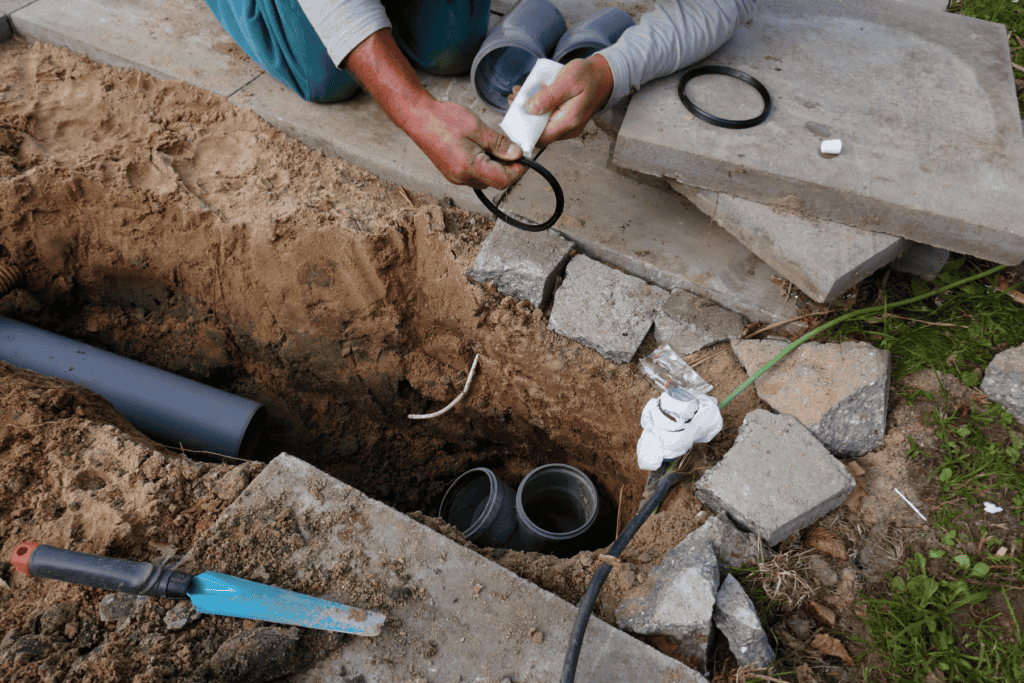
Understanding your trenchless sewer repair cost starts with identifying the specific physical challenges beneath your lawn. Homeowners facing sluggish drains, recurring backups, or soggy patches in the yard often fear repairing an underground line will require destroying driveways and landscaping. Modern trenchless sewer repair offers an alternative to traditional trenching, yet project estimates still vary significantly from home to home. Rather than relying on generic ballpark figures, evaluating the true scope requires looking at pipe condition, access points, and the physical layout of your plumbing system.
Every property presents unique underground conditions across Northern Virginia and Suburban Maryland. A repair plan that works for a shallow line beneath an open lawn won’t meet the needs of a deep run under a paved patio. By learning how professionals evaluate line diameter, burial depth, and structural stability, you can better navigate your options and choose the most practical path forward.
Factors Influencing Sewer Repair and Replacement Expenses
Underground utility work involves several distinct variables that shape your final quote. While non-invasive methods minimize yard disruption, the overall sewer line repair cost depends heavily on the physical environment surrounding the pipe.
Pipe Length, Depth, and Diameter
The total run of the damaged pipe directly affects material quantities and labor requirements. Sewer lateral diameter varies by property and local requirements, and pipe size can affect the equipment, materials, and repair method needed for the project. Depth also plays a major role in the overall trenchless pipe repair cost. Trenchless methods avoid excavating the entire sewer line, but some techniques still require limited access or receiving pits. The amount of excavation depends on the repair method, existing access points, pipe depth, and site conditions. When a line sits several feet deep, excavating and shoring those access pits safely requires additional time and equipment.
Existing Pipe Condition and Accessibility
The condition of the existing sewer line helps determine the appropriate trenchless method. CIPP lining generally requires a passable host pipe that has not collapsed so severely that the liner cannot be installed, while pipe bursting can replace more extensively deteriorated pipe but has its own access, soil, alignment, and site limitations.¹ ²
- The presence of mature tree root networks near the pipe alignment
- Physical surface obstacles such as concrete driveways, stone walkways, or porches
- The accessibility of an existing exterior cleanout near the foundation
- Soil composition and moisture levels surrounding the lateral line
When accessibility is limited, the crew may need to create an exterior access point before lining or bursting can begin. If you are comparing estimates for professional drain clearing versus deeper structural repairs, clarifying site accessibility will help you understand where crew hours are spent.
Comparing Trenchless Solutions and Conventional Excavation
Choosing the right repair method depends entirely on the structural condition of the lateral line. No single technique suits every situation, and comparing trenchless options with conventional excavation helps ensure you invest in a durable, long-term solution.
Cured-in-Place Pipe Lining Considerations
Cured-in-place pipe (CIPP) lining involves inserting a resin-saturated liner into the existing sewer line and curing it in place to form a new structural pipe within the host pipe.¹ CIPP is generally suited to sewer laterals that still provide a usable pathway for liner installation. Crushed or fully collapsed sections can prevent installation, and lining follows the existing line and grade rather than correcting major slope problems.¹ If sections have suffered full structural collapse or severe back-pitching, cured-in-place lining cannot correct the slope. When lining is viable, it restores flow without requiring deep excavation across your property.
Pipe Bursting and Full Line Replacement
When a sewer line has collapsed or deteriorated beyond the reach of a liner, homeowners often turn to trenchless sewer line replacement. Pipe bursting uses a bursting head to fracture or split the existing pipe while simultaneously pulling a new replacement pipe into its place. HDPE and fusible PVC are common replacement materials, although the appropriate material depends on the project.² Pipe bursting cost can vary with the length and depth of the line, access conditions, soil characteristics, bends, and the size of the replacement pipe.² However, if the existing pipe runs beneath dense utility corridors or has suffered severe ground shifts, traditional open-trench replacement may still be necessary to establish proper grade.
Diagnostics, Permitting, and Determining the Right Solution
Accurate diagnostics protect homeowners from unexpected expenses during underground utility work. Before approving any repair plan, a thorough assessment ensures the selected technique addresses the root cause.
Why Camera Inspections Are Essential Before Quoting
A sewer camera inspection is an important part of evaluating many trenchless projects because it helps technicians identify the location and type of damage before recommending a repair method. A high-resolution sewer camera inspection reveals hidden cracks, joint separations, corrosion, and root intrusions. If a blockage prevents a clear camera inspection, drain cleaning or hydro-jetting may be needed first to create a clear path through the line. This visual walkthrough ensures technicians know whether trenchless pipe replacement is feasible or whether broken sections require localized excavation.
Permits, Inspections, and Site Restoration
Municipal regulations and local codes influence the overall cost to replace sewer line connections. Permit requirements vary by jurisdiction and project scope. For example, Fairfax County requires a plumbing permit for sewer lateral repairs, and work within a state-maintained public right-of-way may also require a VDOT permit.³ While non-invasive methods protect lawns and hardscapes, conventional digging requires substantial post-project grading, sod replacement, and paving repairs. Surface restoration is another cost factor to consider when comparing trenchless work with conventional excavation. Avoiding extensive digging may reduce the amount of landscaping, paving, or hardscape restoration needed after the sewer repair.
Finding the Right Sewer Solution for Your Home
Navigating sewer problems can feel overwhelming, but gathering clear information simplifies the decision. Your final sewer line installation and replacement hinges on pipe depth, total distance, structural integrity, and local permitting requirements. Whether your property is best suited for cured-in-place lining, pipe bursting, or targeted physical excavation, an honest diagnostic evaluation will pinpoint your lateral line’s exact needs.
Investing in a durable sewer repair protects your property’s value and prevents recurring emergencies. Working with an experienced team ensures that you receive transparent recommendations tailored to your home’s layout, local building codes, and long-term plumbing goals.
Schedule a Sewer Line Evaluation with My Plumber Plus
If your drains are backing up or you suspect a cracked underground line, turn to the licensed team at My Plumber Plus. Serving local communities since 1982, our experienced technicians provide dependable plumbing services in Northern Virginia and Suburban Maryland. For a comprehensive camera inspection or an accurate estimate for trenchless sewer repair, a knowledgeable plumber in Manassas, VA, can evaluate your system and provide straightforward recommendations. Contact us online today to schedule your sewer line assessment.
Sources
Sources
- National Association of Sewer Service Companies (NASSCO). Pipe Rehabilitation.
- National Association of Sewer Service Companies (NASSCO). 2025. Pipeline Rehabilitation Matrix 2025.
- Fairfax County Public Works and Environmental Services. Residential Wastewater Management.