
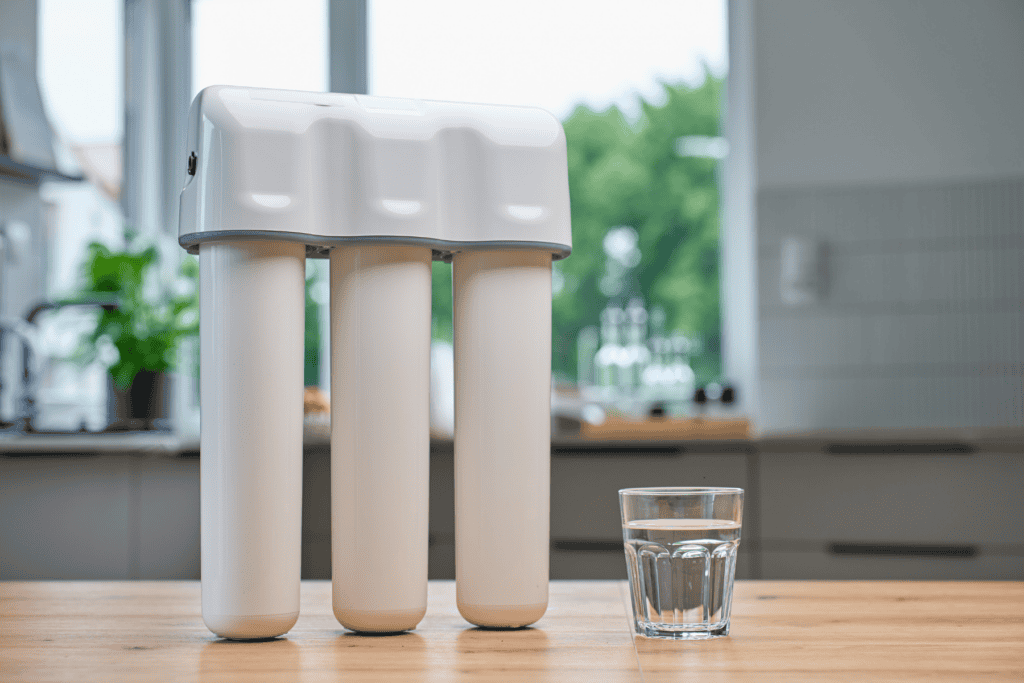
Many homeowners assume that water treatment equipment is one-size-fits-all. In reality, choosing between a water filter vs. a water softener comes down to solving two distinct plumbing challenges. A water softener removes hardness minerals that damage pipes and appliances. A water filtration system can reduce specific contaminants, tastes, odors, or sediment, depending on the filter type and its certifications. Installing the wrong system leaves your primary problem unsolved.
When scheduling professional plumbing services in Northern Virginia, local homeowners often ask which setup should come first. This guide explains how each system works, compares key performance benchmarks, and highlights clear water symptoms. You will also learn when to choose point-of-use alternatives or combine whole-home systems.
Water Filter vs Water Softener: How Each System Operates
Water softeners and filtration systems rely on distinct physical and chemical methods to improve tap water. Knowing how each system works helps you invest in the right equipment.
How an Ion-Exchange Water Softener Works
A whole-home water softener targets dissolved rock minerals like calcium and magnesium. These minerals pass through a mineral tank filled with resin beads. Through ion exchange, the beads capture calcium and magnesium while releasing sodium or potassium ions. Units certified under NSF/ANSI Standard 44 are tested to verify hardness reduction and structural integrity.
Once the resin beads fill with minerals, the system runs a regeneration cycle. It washes the beads with salt brine and discharges the minerals. Removing hard minerals prevents scale inside your water heater, dishwasher, and plumbing lines. Soft water also lets soaps lather properly and prevents chalky scale from clogging faucet aerators.
How Whole-Home and Point-of-Use Filters Work
A water filter acts as a physical or chemical barrier against impurities. Standard filters do not remove dissolved mineral hardness. Instead, they direct water through media like activated carbon blocks or sediment screens. Activated carbon units certified under NSF/ANSI Standard 42 reduce aesthetic chlorine, bad taste, and odor. Systems certified under NSF/ANSI Standard 53 may be certified to reduce specific contaminants with health effects, such as lead, depending on the individual product’s certified claims.
Homeowners do not always need a whole-house unit. If your main goal is clean cooking and drinking water, a point-of-use reverse osmosis system under your kitchen sink is a cost-effective alternative. NSF/ANSI Standard 58 covers point-of-use reverse osmosis systems and requires verification of total dissolved solids reduction. Individual systems may also be certified for specific contaminants such as nitrate, fluoride, lead, or arsenic.
Identifying Signs of Hard Water and Contamination
Diagnosing water issues starts by checking how your water performs across fixtures and appliances. Physical symptoms usually point to either high mineral hardness or dissolved impurities.
Symptoms of Hard Water
Hard water leaves visible residue on household surfaces. According to the U.S. Geological Survey (USGS), water containing 121 to 180 milligrams per liter (mg/L) of hardness as calcium carbonate is classified as hard, while water above 180 mg/L is considered very hard.1 At these levels, you will notice chalky white limescale on faucets and glass shower doors. Dishes from the dishwasher often show a cloudy film. Soap struggles to lather, leaving your skin dry and your hair brittle.
Inside your plumbing, mineral scale restricts flow through copper and PEX piping. In water heaters, minerals form an insulating layer on heating elements and tank bottoms. This buildup forces the unit to run longer, increasing utility use and shortening tank life.
Symptoms of Contaminants and Filtration Needs
Taste, odor, color, or sediment can indicate a water-quality issue, but these symptoms alone cannot identify a specific contaminant. EPA’s secondary drinking water guidelines include a recommended limit of 500 mg/L for total dissolved solids because higher levels can contribute to aesthetic issues such as deposits, staining, or unpleasant taste. The EPA regulates chlorine separately under its primary drinking water standards, with a maximum residual disinfectant level of 4.0 mg/L.2
Well water systems often present earthy smells, hydrogen sulfide sulfur odors, or rust flecks. Orange or reddish stains on porcelain indicate dissolved iron above the EPA secondary standard of 0.3 mg/L. These suspended particles can clog your faucet aerators and stain your laundry.
Use this summary to diagnose your water conditions:
- Hard water symptoms include crusty limescale on spouts, soap scum in tubs, stiff laundry, and sediment buildup in water heaters.
- Filtration symptoms include swimming pool chlorine smells, rotten-egg odors, cloudy water, rust discoloration, and gritty tap sediment.
These symptoms can help narrow down whether the main concern is mineral hardness or a separate water-quality issue, but visual and sensory clues are only a starting point. If odors, staining, cloudiness, or sediment persist, professional water testing can identify what is actually present and help determine whether the home would benefit from filtration, softening, or a combination of treatment methods.
Deciding Between a Water Filter or Water Softener
Choosing between a water filter vs. a water softener depends on testing your water supply and identifying your primary concerns. Testing uncovers whether you face mineral hardness, chemical contaminants, or both.
When to Consider Salt-Free Conditioners or Point-of-Use Units
A traditional salt-based softener is not your only option for scale control. Salt-free water conditioners are designed to help manage scale without removing hardness minerals through traditional ion exchange. Unlike conventional salt-based softeners, they don’t soften water by removing calcium and magnesium, so homeowners should understand the difference before choosing a system.
Likewise, pairing a salt-free conditioner with a point-of-use reverse osmosis filter protects pipes from scale and provides purified drinking water at your sink. This combination offers a balanced solution without the salt refills required by traditional units.
When Homes Need Both Whole-House Systems
Homes with both hard water and separate filtration concerns may benefit from using a water softener and filtration system together. When both systems are installed, their order depends on the water conditions, filtration media, equipment specifications, and treatment goals. A professional can determine the appropriate configuration after evaluating the home’s water supply.
Once the filter cleans the water, the softener removes calcium and magnesium. This multi-stage approach protects your appliances while delivering clean, odor-free water to every tap.
The Role of Professional Testing and Installation
Water systems must match your home peak flow rate and incoming line diameter. Improper sizing causes noticeable pressure drops. A licensed plumber tests your water, measures water pressure, and ensures your system includes proper air gaps and bypass valves. For reliable guidance on a water filter vs. water softener installation, consult an expert plumber in Manassas, VA, who knows local water profiles.
Selecting the Best Water Treatment Setup for Your Home
Choosing between a water filter vs. a water softener comes down to your water chemistry. Softeners remove calcium and magnesium to shield your plumbing, dishwashers, and water heaters from scale. Water filters target chlorine, chemical tastes, sediment, and heavy metals.
Review your home symptoms carefully before buying equipment. White mineral spots, scale, and soap-performance issues can suggest hard water, while unusual taste, odor, color, or sediment may point to a separate water-quality concern. Water testing can help determine whether softening, filtration, or a combination of treatment methods is appropriate.
Schedule an In-Home Water Quality Assessment
If you want to resolve hard water scale, unpleasant odors, or discolored water, the team at My Plumber Plus can help. Since 1982, our licensed technicians have helped homeowners across Fairfax and Northern Virginia select reliable water treatment systems.
Our team provides expert installation for whole-home filters, water softeners, and complete plumbing walkthroughs. We also provide electrical repair and local HVAC services in Manassas, VA. Contact our team today to evaluate your water quality and protect your home plumbing.
Source
- USGS. Hardness of Water. August 24, 2026. https://www.usgs.gov/water-science-school/science/hardness-water
- EPA. Secondary Drinking Water Standards: Guidance for Nuisance Chemicals. https://www.epa.gov/sdwa/secondary-drinking-water-standards-guidance-nuisance-chemicals