
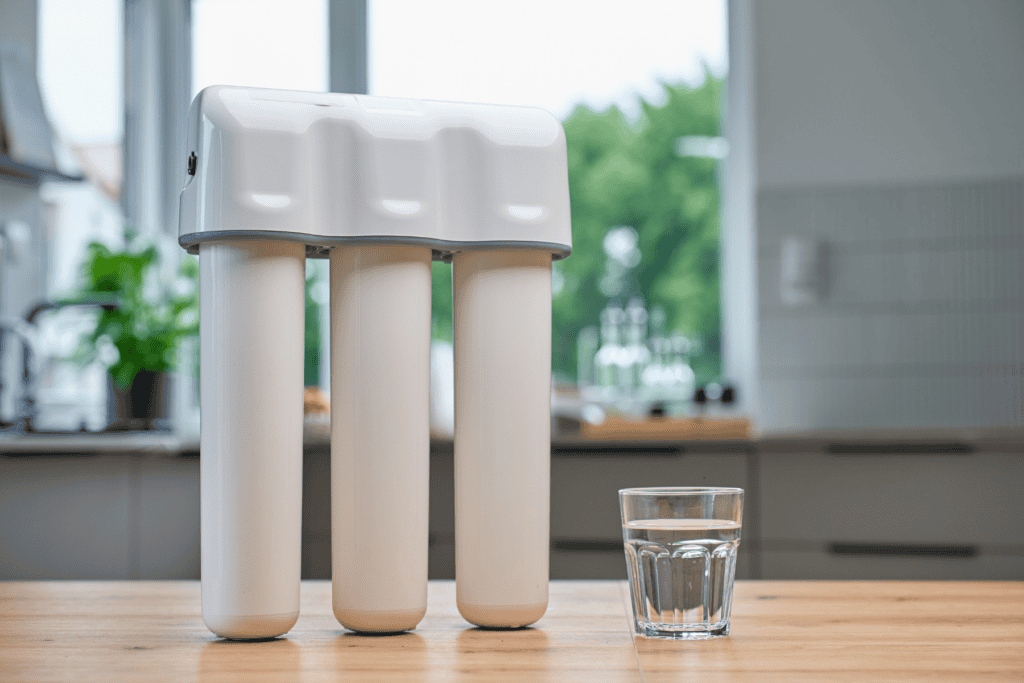
Every home has unique plumbing, water demand, and incoming water quality. Because of these differences, whole house water filter cost varies widely by property. A single flat estimate rarely reflects the true scope of work. A properly selected whole-home water filter can address specific water-quality concerns throughout the home, but no single treatment technology removes every contaminant.¹ To budget accurately, you must evaluate your water supply and household goals.
Working with an experienced plumber in Manassas, VA, helps local homeowners understand their exact equipment needs. Municipal water and private wells bring different treatment challenges across Northern Virginia and Suburban Maryland. Evaluating your plumbing setup and testing your incoming supply creates a realistic budget. You do not need to rely on vague national averages.
Factors That Shape Whole-House Water Filter Cost
Several factors influence whole-house water filter cost, and you should choose the right system based on the home’s actual treatment needs. EPA recommends identifying water-quality concerns and treatment goals before choosing equipment.¹ The biggest cost factors typically include:
- The contaminants or water-quality issues the system is intended to address
- The filtration or treatment technology required
- The amount of water the household needs treated
- The existing plumbing layout and any installation modifications required
- Ongoing filter, media, energy, water, and maintenance requirements
For homes supplied by a public water system, homeowners can review their annual Consumer Confidence Report for information about local drinking water quality. Private-well owners or homeowners seeking additional testing can use a state-certified drinking water laboratory.¹
Filtration Media and Technology Options
Filtration technologies vary in both purpose and price. EPA notes that whole-house, or point-of-entry, systems generally cost several thousand dollars to install and may require plumbing alterations and professional maintenance.¹ Activated carbon, filtration media, reverse osmosis, ultraviolet treatment, and other technologies also have different capabilities and limitations. For example, UV treatment can address biological contaminants but does not remove chemical contaminants.¹ Choosing equipment based on the specific water-quality concern helps homeowners avoid paying for unnecessary treatment stages.
Whole-House Filtration Versus Water Softening
Whole-house filtration and water softening are not interchangeable. Filtration systems use different technologies to address specific contaminants or aesthetic concerns, depending on the equipment selected. A water softener primarily addresses hardness caused by calcium and magnesium, which can contribute to mineral scale on plumbing fixtures and appliances.¹ Some homes may benefit from both filtration and softening, but the appropriate setup depends on the home’s water quality and treatment goals.
Labor, Placement, and Installation Complexity
Equipment accounts for only one part of the overall investment. EPA notes that water-treatment pricing varies by treatment technology, installation location, and the contaminants being addressed. Whole-house systems may also require plumbing alterations and professional maintenance.¹ Labor costs therefore depend on factors such as existing piping, available installation space, access to the main water line, and the amount of plumbing modification required.
Pipe Material and Installation Alternatives
Technicians examine the main water line, available installation space, and existing pipe material before beginning work. Some homes may require transition fittings, shutoff changes, or other plumbing modifications before installing a filtration system. If existing piping already shows significant deterioration, addressing those conditions during the project may help avoid installing new equipment around aging plumbing.
Bypass Loop and Utility Configurations
Installation requirements depend on the specific filtration equipment and plumbing layout. Many whole-house systems use a bypass arrangement so water service can continue during maintenance. Certain systems may also require access to drainage, electrical power, or other utilities depending on how the equipment operates. A plumber can account for these requirements when determining the installation scope.
Upfront Investment Versus Long-Term Operating Costs
A complete financial plan balances initial purchase costs against long-term maintenance. Entry-level systems may look economical upfront, but they often require frequent cartridge replacements. Reviewing the multi-year operating expenses helps you protect your household budget over time.
Replacement Media and Cartridge Cycles
Filter and media replacement intervals vary by treatment technology, water quality, household use, and equipment specifications. EPA recommends replacing filters according to the manufacturer’s instructions.¹ When comparing systems, homeowners should consider replacement filters or media, professional maintenance, and any electricity or water the equipment uses in addition to the initial whole-house water filter cost.
System Capacity and Flow Rate Needs
Whole-house filtration equipment should be sized for the amount of water the household needs treated during peak-use periods. EPA recommends considering the quantity of water that requires treatment and cautions against unnecessary oversizing because larger systems generally cost more to purchase, operate, and maintain.¹ A plumber can compare household demand with the rated flow and pressure characteristics of the filtration equipment being considered.
Summary of Key Water Treatment Considerations
Planning your water treatment budget involves more than comparing equipment price tags. Your total whole-house water filter cost reflects water chemistry, plumbing access, flow-rate demands, and installation labor. Comparing annual cartridge replacements against durable tank systems helps you select the most economical option for your household.
Professional testing and plumbing inspection services clarify your pipe configuration and water quality goals. Experienced technicians ensure your system delivers sufficient flow without dropping water pressure. The right filtration system can address targeted water-quality concerns throughout the home while providing adequate flow for normal household use.
Upgrade Your Home Water Quality with My Plumber Plus
Get clean, reliable water with the experienced team at My Plumber Plus. Our licensed technicians inspect your plumbing, review your water quality, and provide clear upfront pricing. Contact our team for water testing, filtration installation, and expert plumbing services in Manassas, VA. Schedule your whole-home water evaluation with My Plumber Plus today.
Source
- United States Environmental Protection Agency. November 2024. WaterSense Guide to Selecting Water Treatment Systems.